APHROCHIC

Explore The Collection
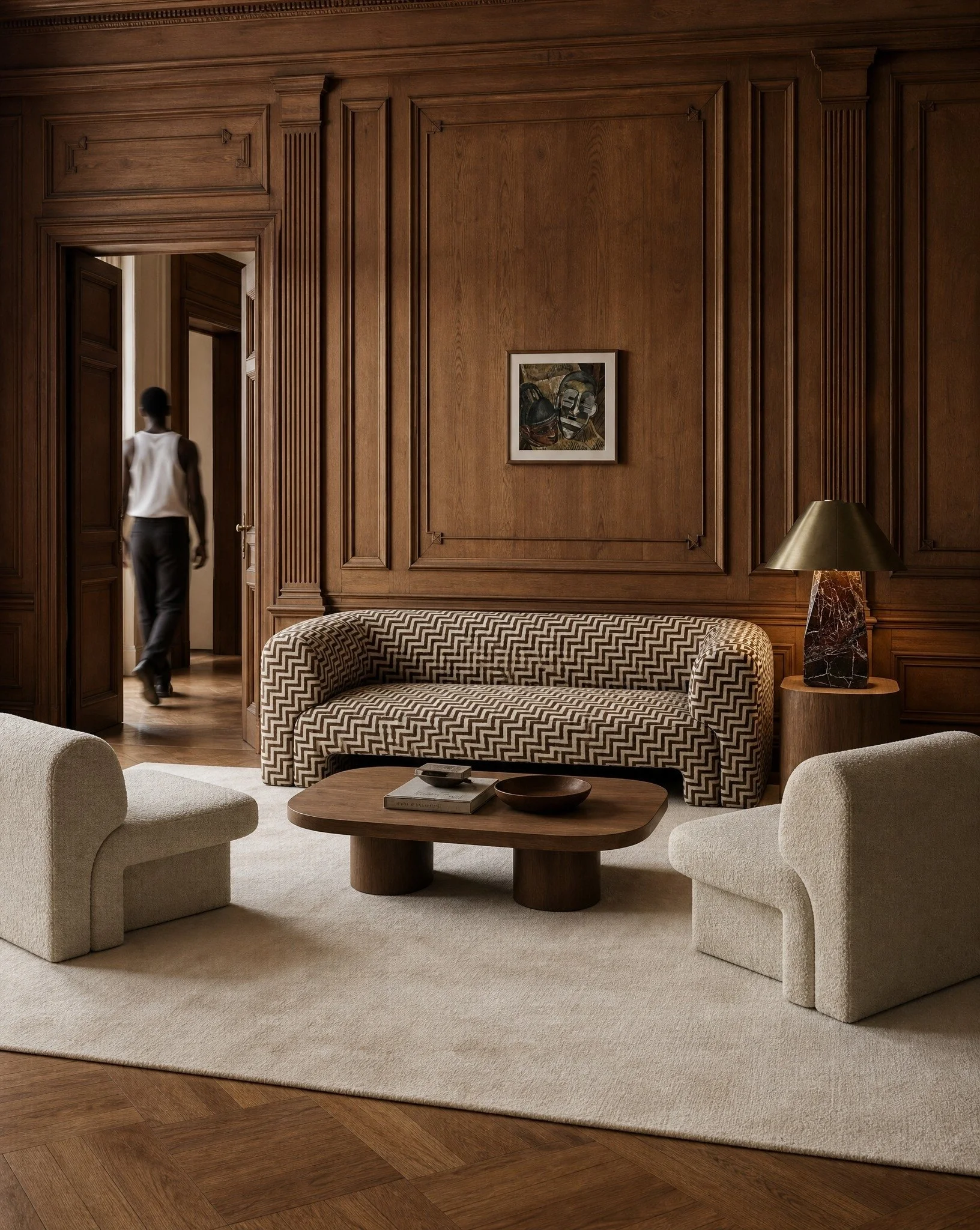
FURNITURE
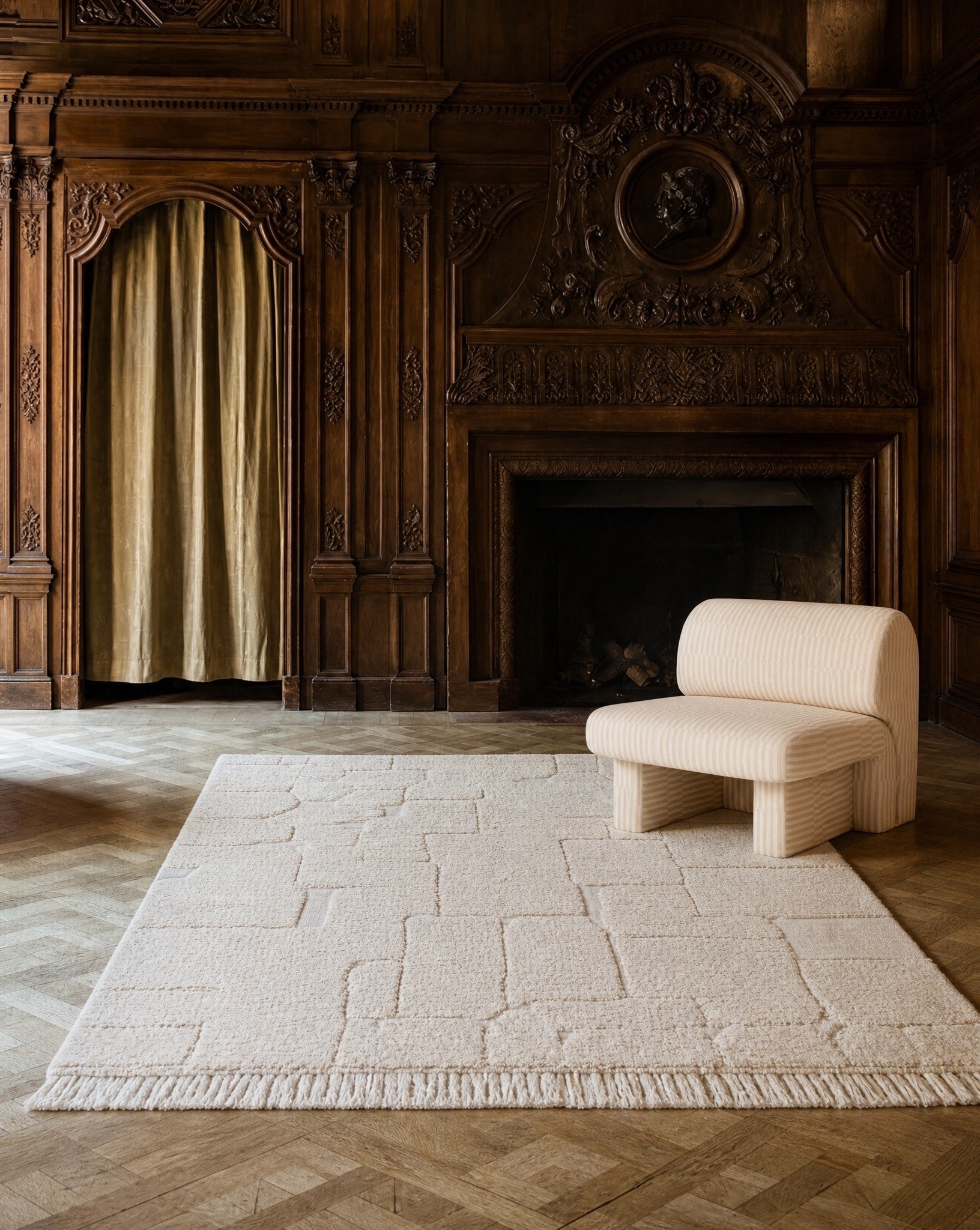
RUGS
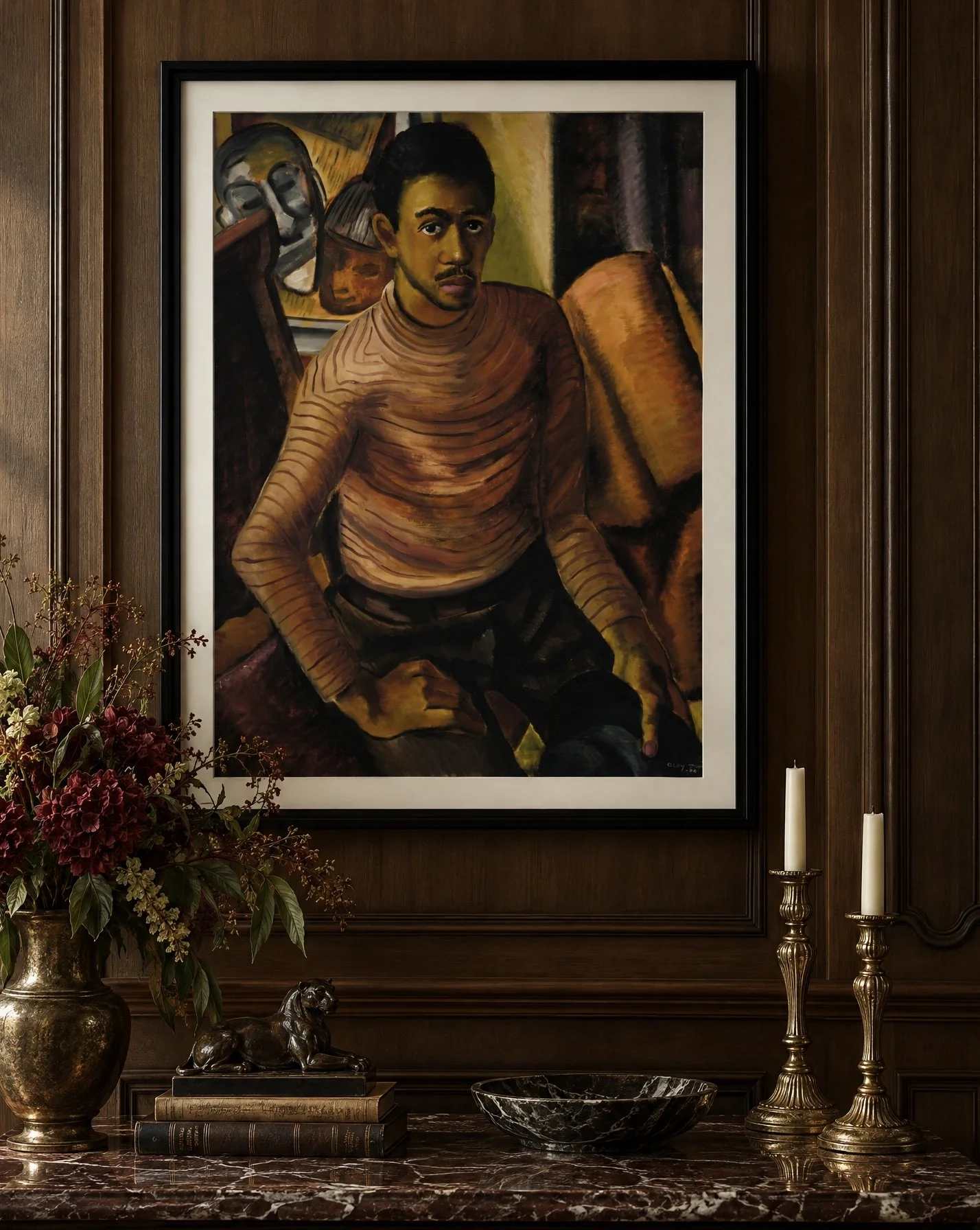
FINE ART
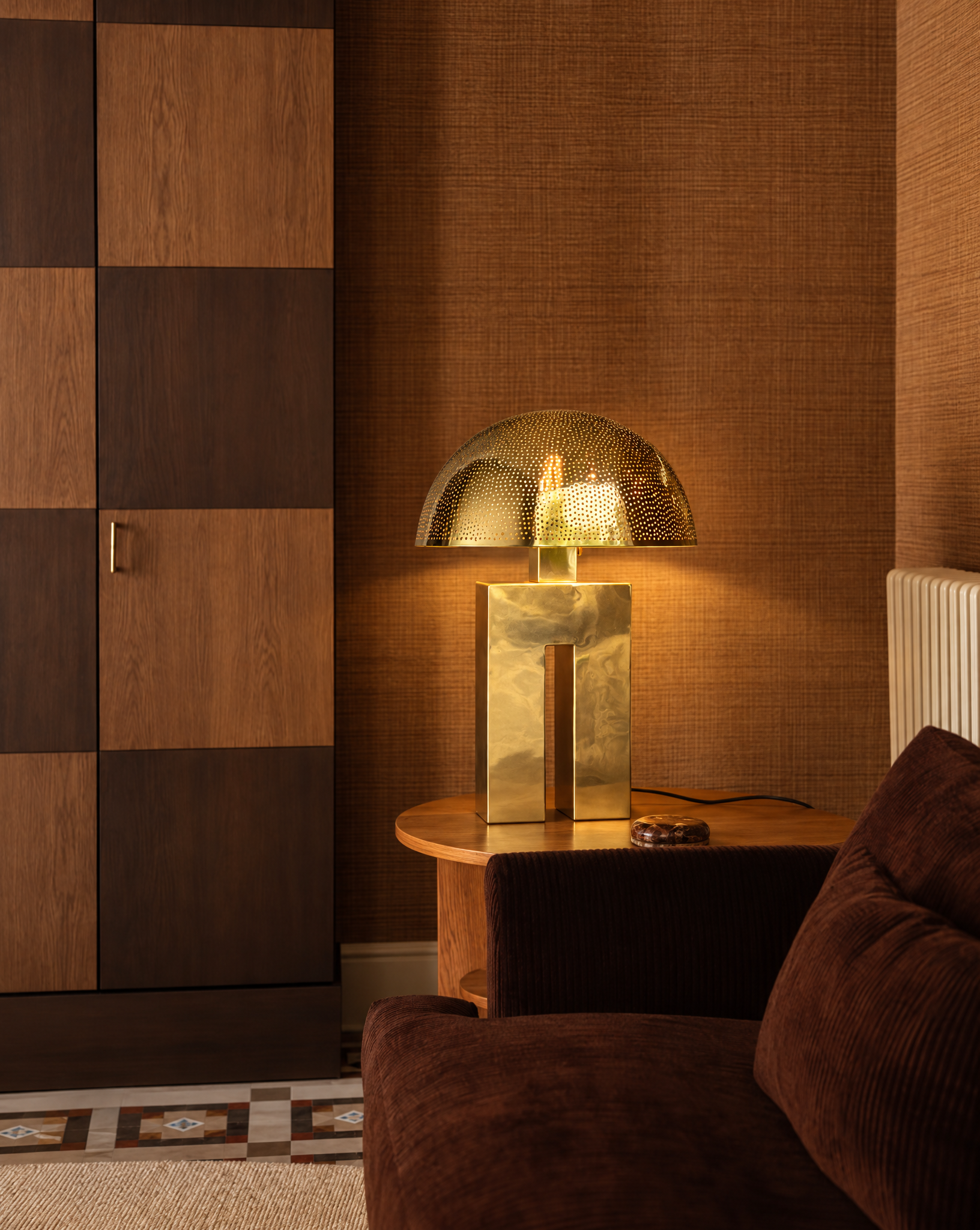
LIGHTING
Details
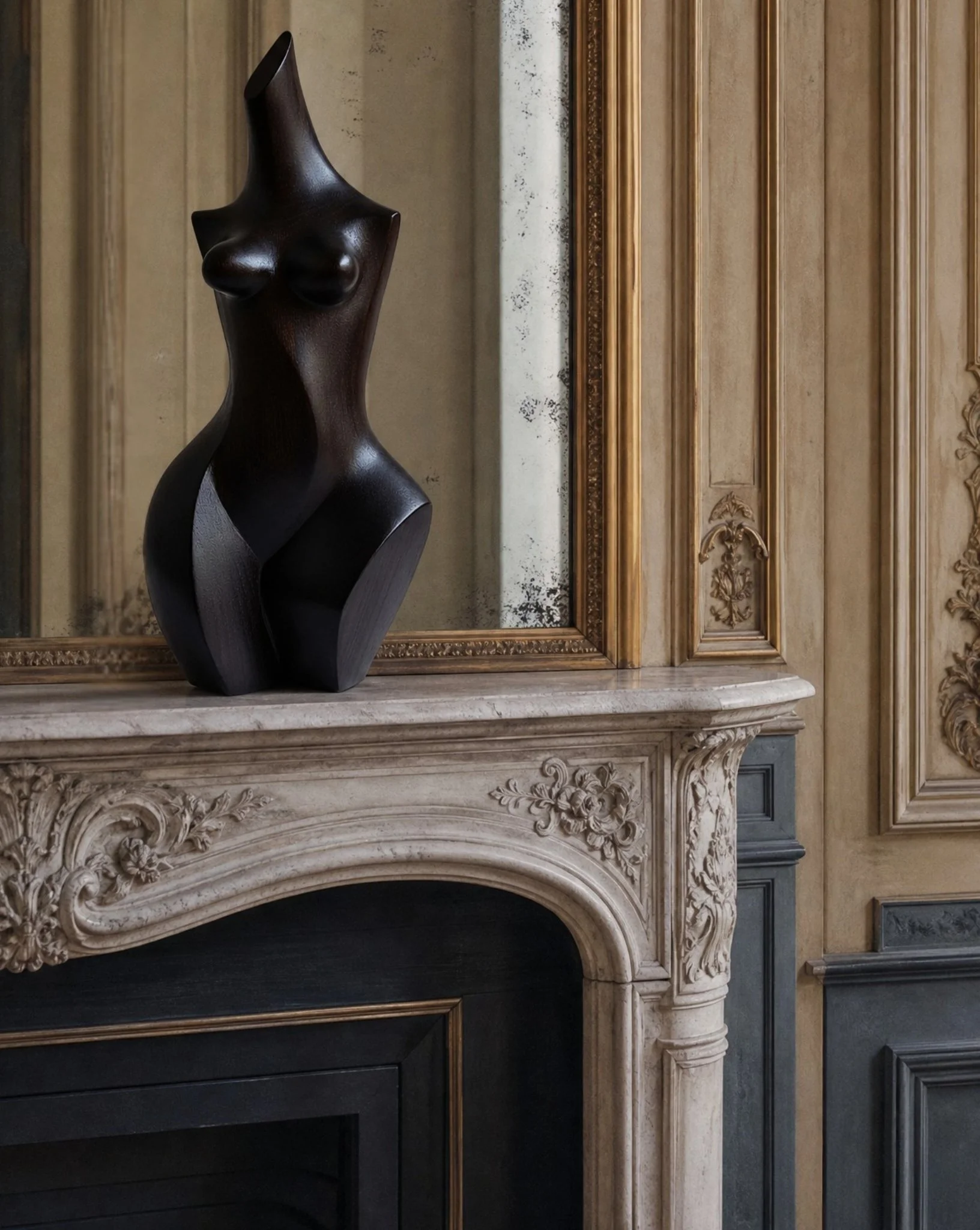
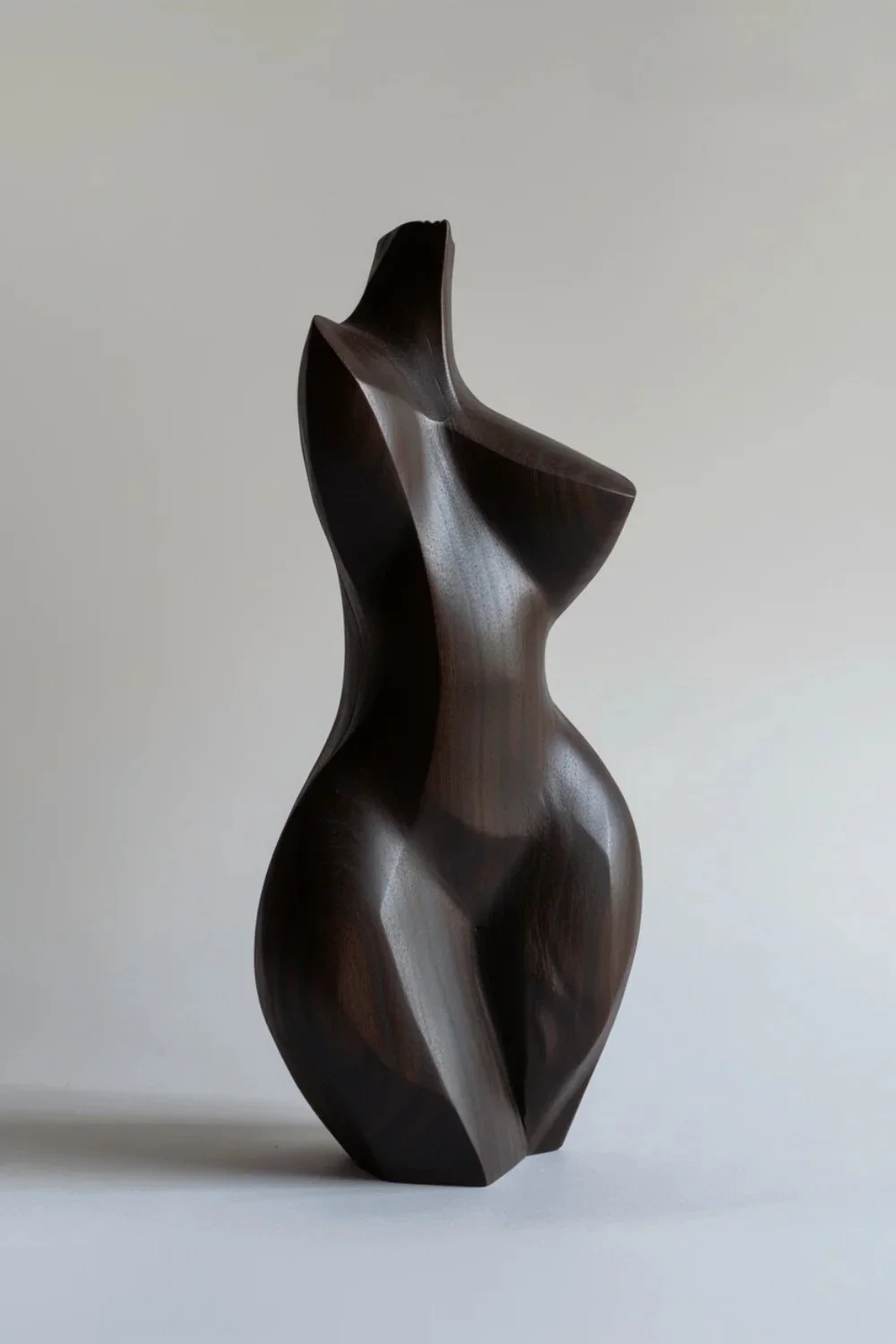
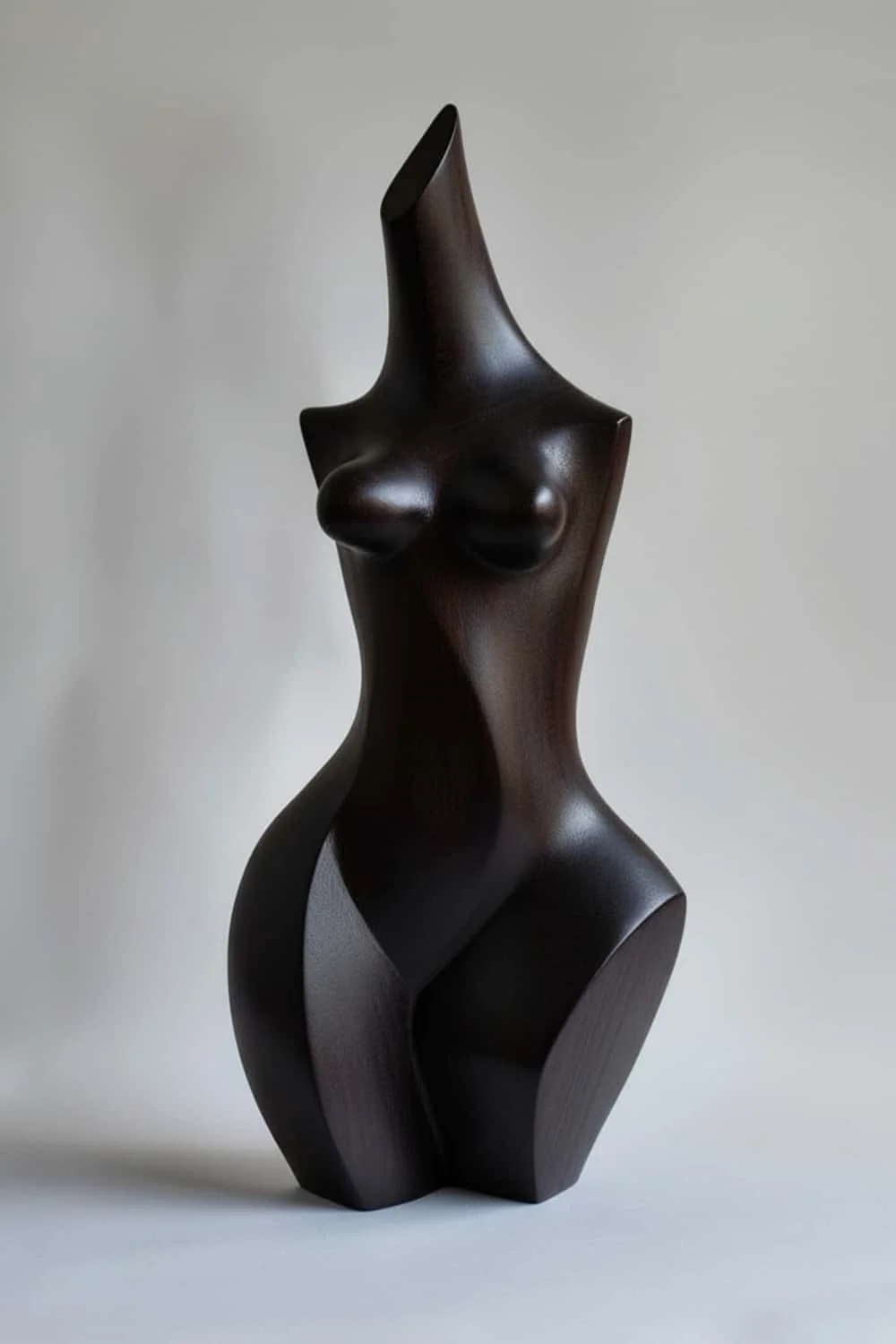
Our Nardal Wood Sculpture No. 1 is an homage to the Nardal sisters whose Paris salon was integral to the development of the Négritude movement. This artisan-made sculpture is a stunning statement piece for the home, standing at over a foot tall, and featuring a natural wood grain. Abstract in design, with an art deco, cubist silhouette, this sculpture is the perfect addition to a growing art collection.
Editors' Note
This piece is part of the Nardal Collection — dedicated to the seven Nardal sisters whose lives and work shaped so much of Black internationalism throughout the world, and laid the groundwork for the Négritude movement of the 1930s and 40s. The sisters — Paulette, Emilie, Alice, Jane, Lucy, Cécile and Andrée — born between 1896 and 1910 in Martinique, were the children of Paul Nardal and Louise Achille, both of whom hailed from prominent families. Both highly educated and accomplished musicians, Paul and Louise raised their daughters to follow in their footsteps, with the then lofty expectation that their daughters would earn their livings themselves, outside of the home. Accordingly, all 7 were highly educated and accomplished in various fields from healthcare to education. Further, the Nardal’s home often hosted gatherings of local intellectuals and musicians of high regard, a habit which, as it would be repeated by their daughters, would have a significant impact on the world. Paulette Nardal arrived in Paris in 1920 to pursue the study of English literature at Sorbonne University, one of first Black people to gain admission. She was joined in time by her sisters Jane and Andrée, who had come to pursue studies of their own. In the period between World Wars I and II, Paris became a haven for Black artists, intellectuals and writers. Following their parents’ example, in 1929 the three Nardal sisters established a salon in their home — an apartment in the Parisian suburb of Clamart. Known as, Le Salon de Clamart, it quickly became a hub of social, intellectual and artistic Black life in Paris, and in the process, a major connecting point for the young creative and intellectual vanguard of the emerging Black world. The salon drew visits from figures as varied as Alain Locke and Marcus Garvey, Marian Anderson, doctor and diplomat, Jean-Price Mars, authors Claude McKay and Countee Cullen, American singer and composer Roland Hayes, and Paul and Eslanda Robeson, among many others. The salon also attracted francophone writers René Maran, Aimé Césaire, Léopold Sédar Senghor, and Léon Gontran Damas, the latter three of which are credited with founding the seminal Negritude movement of the 1930s, of which the Nardal sisters are recognized as an integral part. Perhaps, the Nardal sisters’ most impactful tool was their writing. Both Paulette and Jane wrote for La Dépêche africaine (“The African Dispatch”) — a 1920s Parisian newspaper printed by Guadeloupean Maurice Satineau — providing rich cultural and political commentary. In fact, it was Jane’s article, Internationalisme noir (“Black Internationalism”), printed in the paper’s first issue, which is often highlighted as most clearly laying out the principles of Négritude. Later, Jane and Paulette would embark on their own publication journey, establishing the highly impactful journal, La Revue du Monde Noir (“The Review of the Black World”) in 1931. Though the journal saw only six issues before shuttering in 1932, the sisters remained active on various fronts even as the interwar period ended and the world drifted into its next major conflict.
Details
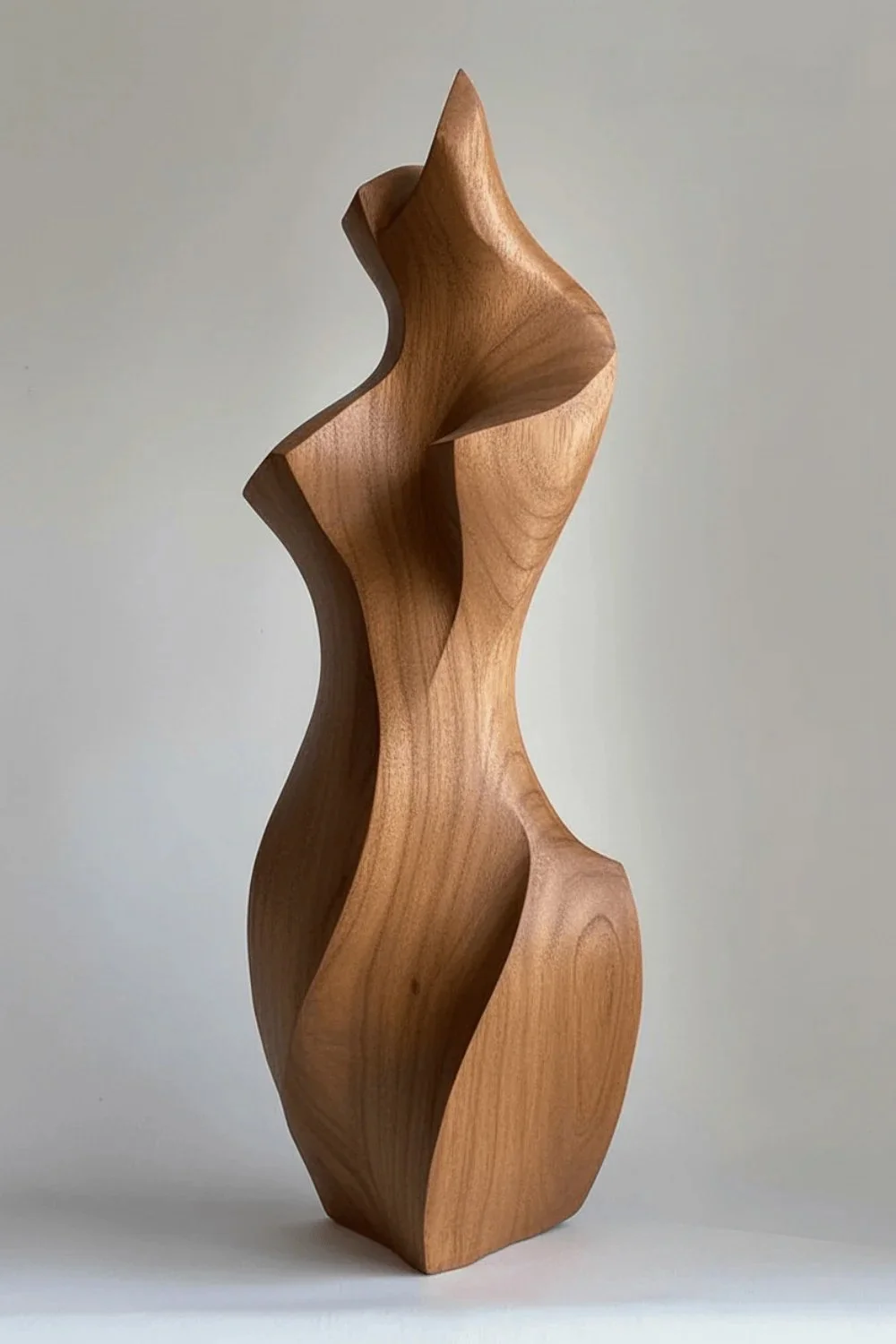
Our Nardal Wood Sculpture No. 2 is an homage to the Nardal sisters whose Paris salon was integral to the development of the Négritude movement. This artisan-made sculpture is a stunning statement piece for the home, standing at nearly two feet tall, and featuring a natural wood grain. Abstract in design, with an art deco, cubist silhouette, this sculpture is the perfect addition to a growing art collection.
Editors' Note
This piece is part of the Nardal Collection — dedicated to the seven Nardal sisters whose lives and work shaped so much of Black internationalism throughout the world, and laid the groundwork for the Négritude movement of the 1930s and 40s. The sisters — Paulette, Emilie, Alice, Jane, Lucy, Cécile and Andrée — born between 1896 and 1910 in Martinique, were the children of Paul Nardal and Louise Achille, both of whom hailed from prominent families. Both highly educated and accomplished musicians, Paul and Louise raised their daughters to follow in their footsteps, with the then lofty expectation that their daughters would earn their livings themselves, outside of the home. Accordingly, all 7 were highly educated and accomplished in various fields from healthcare to education. Further, the Nardal’s home often hosted gatherings of local intellectuals and musicians of high regard, a habit which, as it would be repeated by their daughters, would have a significant impact on the world. Paulette Nardal arrived in Paris in 1920 to pursue the study of English literature at Sorbonne University, one of first Black people to gain admission. She was joined in time by her sisters Jane and Andrée, who had come to pursue studies of their own. In the period between World Wars I and II, Paris became a haven for Black artists, intellectuals and writers. Following their parents’ example, in 1929 the three Nardal sisters established a salon in their home — an apartment in the Parisian suburb of Clamart. Known as, Le Salon de Clamart, it quickly became a hub of social, intellectual and artistic Black life in Paris, and in the process, a major connecting point for the young creative and intellectual vanguard of the emerging Black world. The salon drew visits from figures as varied as Alain Locke and Marcus Garvey, Marian Anderson, doctor and diplomat, Jean-Price Mars, authors Claude McKay and Countee Cullen, American singer and composer Roland Hayes, and Paul and Eslanda Robeson, among many others. The salon also attracted francophone writers René Maran, Aimé Césaire, Léopold Sédar Senghor, and Léon Gontran Damas, the latter three of which are credited with founding the seminal Negritude movement of the 1930s, of which the Nardal sisters are recognized as an integral part. Perhaps, the Nardal sisters’ most impactful tool was their writing. Both Paulette and Jane wrote for La Dépêche africaine (“The African Dispatch”) — a 1920s Parisian newspaper printed by Guadeloupean Maurice Satineau — providing rich cultural and political commentary. In fact, it was Jane’s article, Internationalisme noir (“Black Internationalism”), printed in the paper’s first issue, which is often highlighted as most clearly laying out the principles of Négritude. Later, Jane and Paulette would embark on their own publication journey, establishing the highly impactful journal, La Revue du Monde Noir (“The Review of the Black World”) in 1931. Though the journal saw only six issues before shuttering in 1932, the sisters remained active on various fronts even as the interwar period ended and the world drifted into its next major conflict.
Meet The
Nardal
Collection
Handcrafted Wood Sculpture
Details
Our Nardal Wood Sculpture No. 3 is an homage to the Nardal sisters whose Paris salon was integral to the development of the Négritude movement. This artisan-made sculpture is a stunning statement piece for the home, standing at nearly two feet tall, and featuring a natural wood grain. Abstract in design, with an art deco, cubist silhouette, this sculpture is the perfect addition to a growing art collection.
Editors' Note
This piece is part of the Nardal Collection — dedicated to the seven Nardal sisters whose lives and work shaped so much of Black internationalism throughout the world, and laid the groundwork for the Négritude movement of the 1930s and 40s. The sisters — Paulette, Emilie, Alice, Jane, Lucy, Cécile and Andrée — born between 1896 and 1910 in Martinique, were the children of Paul Nardal and Louise Achille, both of whom hailed from prominent families. Both highly educated and accomplished musicians, Paul and Louise raised their daughters to follow in their footsteps, with the then lofty expectation that their daughters would earn their livings themselves, outside of the home. Accordingly, all 7 were highly educated and accomplished in various fields from healthcare to education. Further, the Nardal’s home often hosted gatherings of local intellectuals and musicians of high regard, a habit which, as it would be repeated by their daughters, would have a significant impact on the world. Paulette Nardal arrived in Paris in 1920 to pursue the study of English literature at Sorbonne University, one of first Black people to gain admission. She was joined in time by her sisters Jane and Andrée, who had come to pursue studies of their own. In the period between World Wars I and II, Paris became a haven for Black artists, intellectuals and writers. Following their parents’ example, in 1929 the three Nardal sisters established a salon in their home — an apartment in the Parisian suburb of Clamart. Known as, Le Salon de Clamart, it quickly became a hub of social, intellectual and artistic Black life in Paris, and in the process, a major connecting point for the young creative and intellectual vanguard of the emerging Black world. The salon drew visits from figures as varied as Alain Locke and Marcus Garvey, Marian Anderson, doctor and diplomat, Jean-Price Mars, authors Claude McKay and Countee Cullen, American singer and composer Roland Hayes, and Paul and Eslanda Robeson, among many others. The salon also attracted francophone writers René Maran, Aimé Césaire, Léopold Sédar Senghor, and Léon Gontran Damas, the latter three of which are credited with founding the seminal Negritude movement of the 1930s, of which the Nardal sisters are recognized as an integral part. Perhaps, the Nardal sisters’ most impactful tool was their writing. Both Paulette and Jane wrote for La Dépêche africaine (“The African Dispatch”) — a 1920s Parisian newspaper printed by Guadeloupean Maurice Satineau — providing rich cultural and political commentary. In fact, it was Jane’s article, Internationalisme noir (“Black Internationalism”), printed in the paper’s first issue, which is often highlighted as most clearly laying out the principles of Négritude. Later, Jane and Paulette would embark on their own publication journey, establishing the highly impactful journal, La Revue du Monde Noir (“The Review of the Black World”) in 1931. Though the journal saw only six issues before shuttering in 1932, the sisters remained active on various fronts even as the interwar period ended and the world drifted into its next major conflict.
New Arrivals

Details
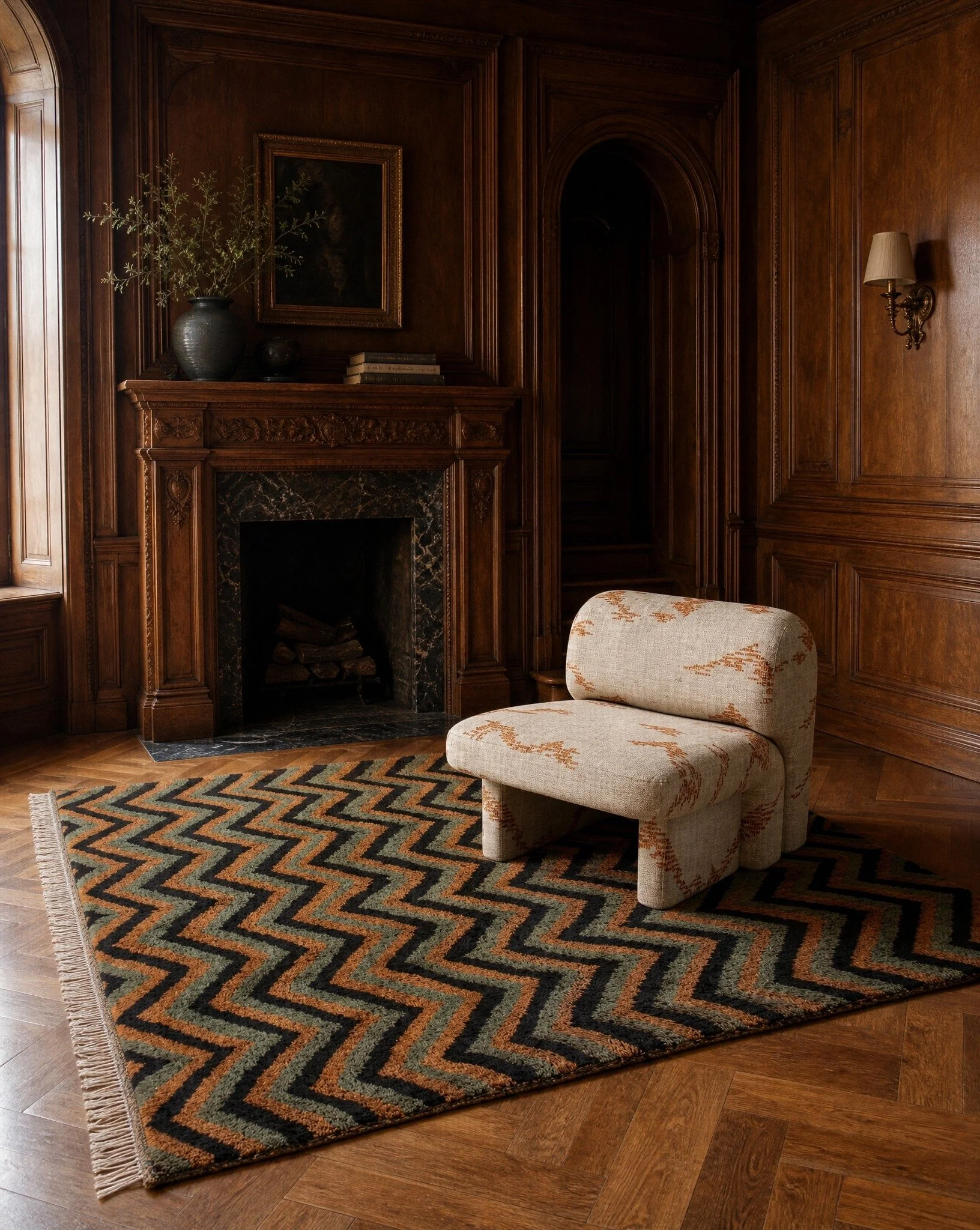
Our Hudson Black And Beige Wool Moroccan Rug is a one-of-a-kind piece, made for you by exceptional artisans of the Beni Mrirt Tribe of Morocco. Handwoven using 100% natural wool, this brand new rug offers unparalleled brilliance, superior softness, and lasting durability. A unique masterpiece for your interior, this rug is woven knot by knot, then bathed and air-dried under the serene Moroccan skies. Part of our Sojourner Rug Collection, each piece beautifully charts her journey to liberation.
Editors' Note
Our Sojourner Rug Collection is named for the powerful orator, activist and American hero, Sojourner Truth. Born into slavery as Isabella Baumfree (also, Bomfree or Bomefree) in 1797, on the Ulster County, New York plantation of the “Low Dutch” Ardinburgh family, Truth was part of a large community of enslaved people that had existed in New York since the early 1600s. Beginning first with the Dutch, and later the English as New Amsterdam made its 1664 transition into modern-day New York, slavery grew in the region until by Truth’s time, New York had the second largest enslaved population among the 13 colonies, trailing only South Carolina. Between 1806, when a 9 year-old Isabella was sold to a cruel and abusive Englishman, John Neely in Kingston, New York, and 1826 when she fled from bondage, Truth was sold no less than 3 times, married, and bore 5 children — one, her daughter Diana — the result of an assault by her final enslaver, John Dumont. In 1826, when Dumont reneged on a promise to free Isabella the year before the scheduled 1827 abolition of slavery in the state, she took her youngest daughter, Sophia, then only 3-months old, and escaped to the home of Isaac and Maria Van Wagenen in New Paltz. The Van Wagenens did not believe in slavery, but paid Dumont for her services for the year to ensure her safety. While there, after a lifetime of religious instruction and harrowing experiences, Isabella had a spiritual awakening that led her to become a preacher, and then — 17 years later — to rechristen herself as Sojourner Truth in 1843. Also, in 1828, Truth sued successfully for the return of her son, Peter, whom Dumont had illegally sold into slavery in Alabama. Called by the Spirit to speak the truth, Sojourner began to live as an itinerant preacher, traveling to speak and living with progressive communities such as the Northampton Association of Education and the Progressive Friends. Through these societies she came into contact with many leading abolitionists and suffragists, including William Lloyd Garrison, Lucretia Mott and Frederick Douglass. Known for her sonorous singing voice and the passion of her sermons, Truth became a sought-after speaker for both abolitionist and suffragist stages and a formidable proponent for both causes — particularly after the 1850 release of her autobiography, which was published by Garrison. The 1850s saw some of the highest points of Truth’s career as an orator, including her 1853 speech, What Time of Night It Is, delivered at a New York State meeting of the Women’s Rights Convention and her most quoted and remembered speech, the 1854 magnum opus, Ain’t I a Woman, given in Akron, Ohio for the Ohio Woman's Rights Convention. Tended to by two of her daughters, she passed away on November 26, 1883. In Washington D.C., Frederick Douglass dedicated a eulogy to her, encapsulating the meaning of her life and work in words that resonate equally today. “Venerable for age,” he said, “distinguished for insight into human nature, remarkable for independence and courageous self-assertion, devoted to the welfare of her race, she has been for the last forty years an object of respect and admiration to social reformers everywhere."
Details
Inspired by the Art Deco style and Jazz era grace of Paris in the 1930s and 40s, the Josephine Rust Jacquard Lounge Chair is a touch of elegance in any room. With lines designed to evoke the continuous flow of water and the softness of natural movement, the refined jacquard upholstery, with an almost calligraphic brushstroke, embraces the body, inviting stillness through comfort. Its fluid, rounded lines, make this piece an eye-catcher that will define and enhance the decor of any space while providing next-level leisure. Pair this lounge chair with other pieces from the Josephine Collection for a perfect look.
Editors' Note
Born Freda Josephine McDonald in 1906, Josephine Baker hailed from St. Louis, Missouri. At 15 she was discovered by a St. Louis vaudeville group and touring with the group eventually landed her the show Shufflin’ Along, taking her to New York just as the Harlem Renaissance was reaching its height. Josephine was discovered again, this time by American socialite Caroline Dudley for an all-Black vaudeville show in Paris — La Revue Nègre. Dubbed “the Black Venus,” by the French press, Josephine’s image inspired filmmakers who cast her in films including her 1927 silent film screen debut, Siren of the Tropics. In 1937, Josephine became an official French citizen, and by the end of the Second World War in 1945, the performer — who was was fluent in French, Italian and Russian — was the hero of her adopted nation, using her celebrity status to obtain information while performing behind enemy lines and passing information encoded onto sheet music with invisible ink. She would became a lieutenant in the Free French Air Force and would go on to crusade for equality in the US in the early years of the Civil Rights Movement. Josephine secured lodgings for herself and her entire band, dictating terms in her contract for integrated audiences, she battled publicly with the Ku Klux Klan, and in 1963 was the only woman to address the crowd at the March on Washington. After Martin Luther King Jr’s assassination in 1968, Coretta Scott King would approach her to consider assuming leadership of the Civil Rights Movement. Baker, who had adopted 12 children over the course of her life, refused, citing concerns for her children should she be killed. Baker passed away in 1975 at the age of 68. “I have never really been a great artist,” she told Ebony magazine earlier that year. “But I have loved and believed in art and the idea of universal brotherhood so much, that I have put everything I have into them, and I have been blessed.”
Details
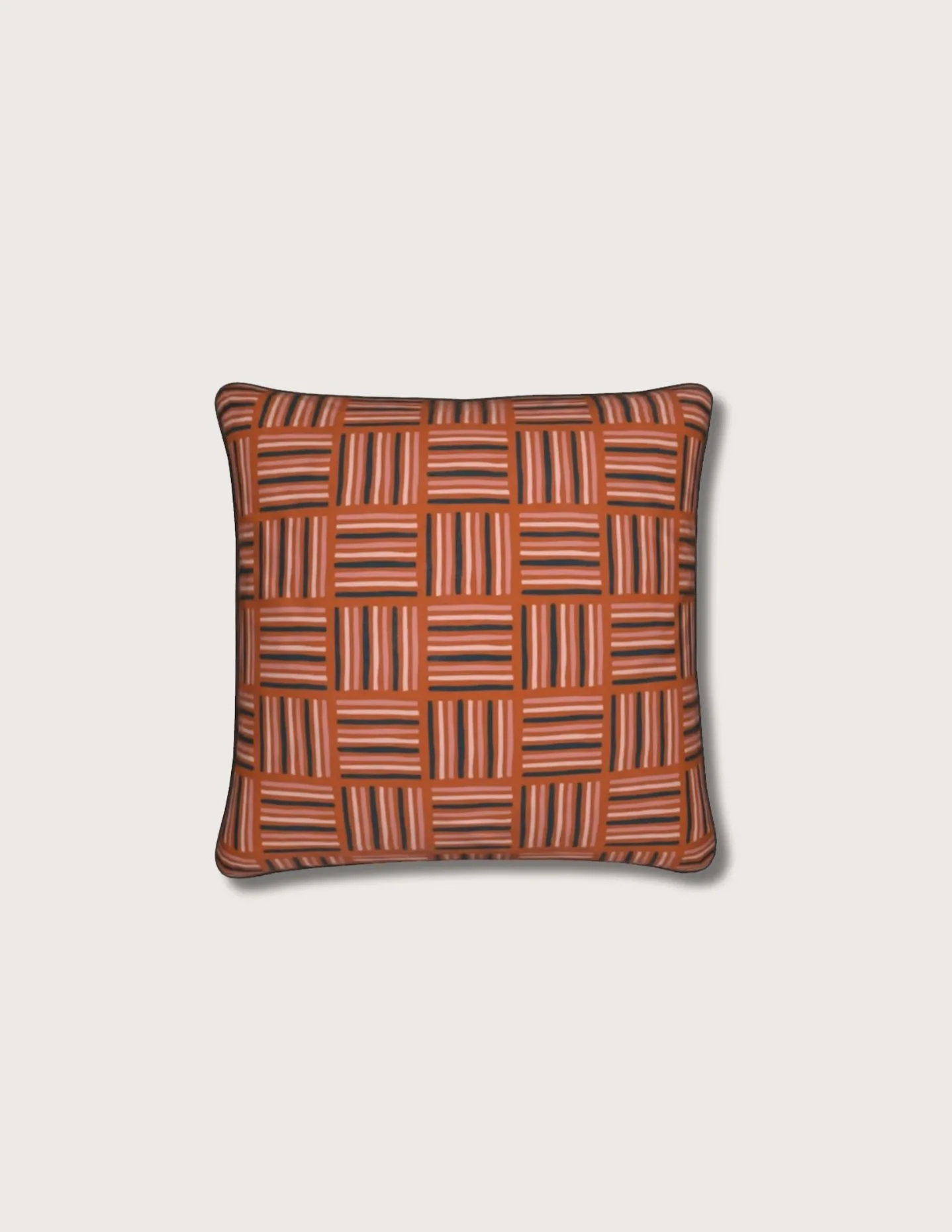
Bring culture home with the Kente Sienna Pillow. Sustainably woven and printed, featuring a luxe duck feather insert, it’s the perfect cushion to lay back on at the end of a long day. Finished with sophisticated touches like its colorful piping and a custom gold zipper, it’s a magazine-worthy addition to any room. When it’s not comforting your body, let the design refresh and renew your spirit — featuring a jubilant pattern inspired by the traditional Ghanaian Kente cloth patterns that became a staple of Black culture from the 1960s through the 1990s. With its vibrant colors and bold pattern, the Kente Sienna Pillow is the perfect note of joy and recognition to welcome you home at the end of any day. Available in cotton-linen, soft velvet, or in our outdoor eco weave fabric.
Editors' Note
A world famous example of African artistry in textiles, and an iconic symbol of Pan-African ideals and Diasporic identity, Ghanaian Kente cloth has a long history detailing a fascinating journey that extends thousands of years into the past. Weaving is believed to have begun in the region as far back as 1000 B.C. among the Akan and Ewe peoples. Many centuries later, the Asante (or Ashanti), members of the Akan ethnic group, were a prosperous kingdom, established under Osei Kofi Tutu I, ruler of the Kwaman State, who led a coalition of Asante kingdoms against the powerful Denkyira, another Akan state that was dominant in the region. According to legend, it was around this time that two brothers, Nana Ameyaw and Nana Koragu, both weavers from Bonwire, came across the web of Anansi, the trickster-god known to manifest as a giant spider. Taught by Anansi to mimic his web, the brothers created the first Kente cloth. Presented to the Asantehene — the supreme ruler of the Asante — it was accepted and reserved for the ritual garments of royalty. From then on, new patterns developed by master weavers had to be presented to the king before they could be released to anyone else. Traditionally, men wear Kente as a single, toga-like garment, while women wear the cloth in two pieces — a dress and a shawl. Originally, Kente cloth was produced all in white, and later in black and white. However, as the Asante kingdom grew in power and wealth, engaging in trade through the export of kola nuts and gold, colored threads, whether dyed domestically or imported, were incorporated into the designs. By 1900, Kente cloth had assumed the form by which it is most popularly known today. In the later years of the Pan-African movement, Kente cloth would achieve global fame, spurred on by combined efforts of Ghana's first president, Kwame Nkrumah, and American scholar, W. E. B. Du Bois. Nkrumah made Kente cloth a staple of his wardrobe for important occasions, including his release from prison in 1951. The pattern he wore that day, Mmeeda, meaning, "Something that has not happened before," was a bold prophecy of the independence that awaited the nation only six years later. Similarly, Du Bois famously wore kente cloth on his 95th birthday as he received an honorary doctorate from the University of Ghana, beginning the African American tradition of adding Kente cloth to graduation attire. Other notable visitors to Ghana in the 1960s, including Maya Angelou, Julian Bond, and Malcolm X, also made Kente cloth part of their attire, adding to its worldwide appeal which would continue into the late 1990s.
Details
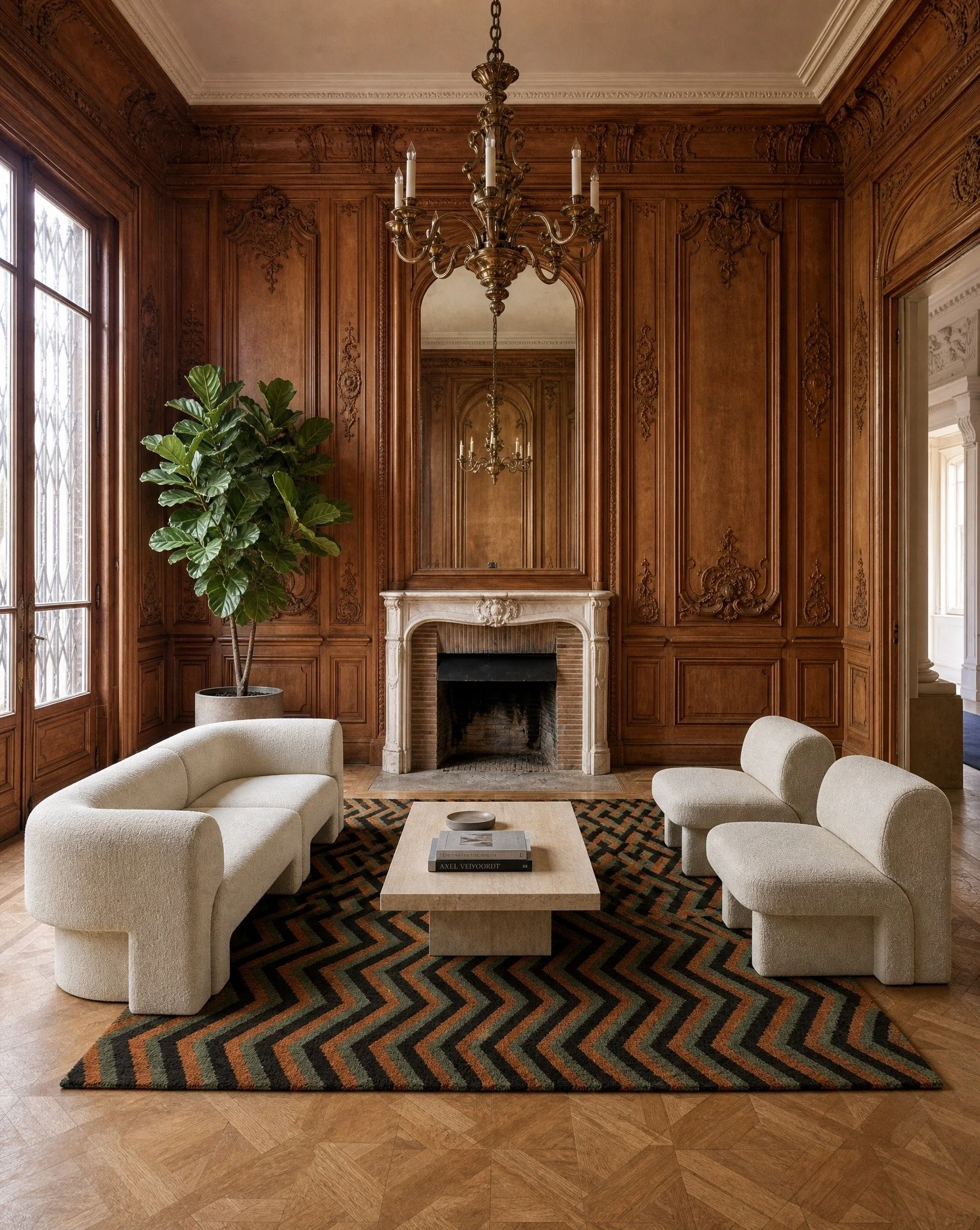
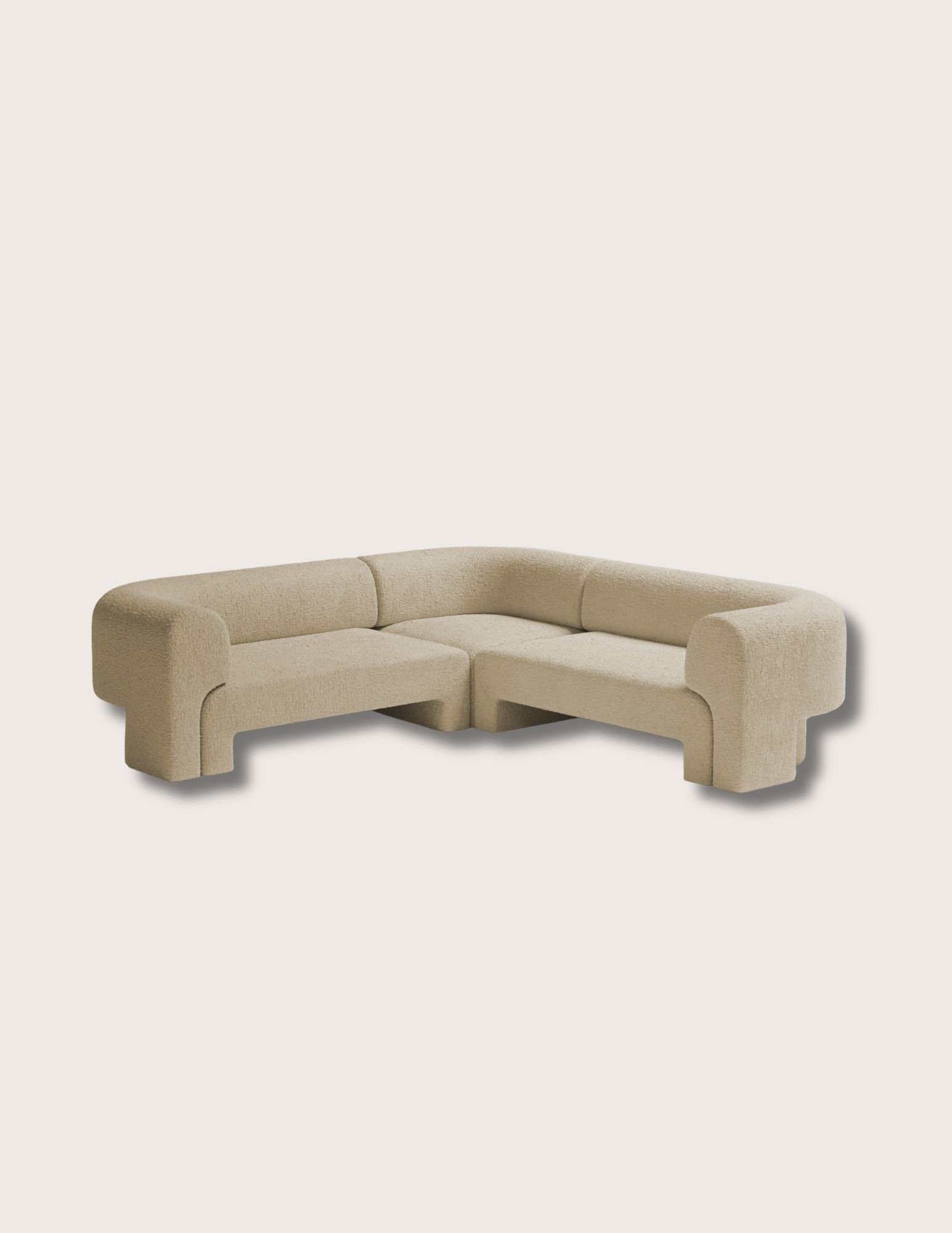
The main ingredients of luxury are comfort and space, and with the Josephine Ivory Bouclé Corner Sectional, you can have it all. Inspired by the Art Deco style and Jazz era grace of Paris in the 1930s and 40s, the ivory bouclé upholstery embraces the body, inviting stillness through comfort. Its expansive, wrap-around frame offers ample seating for multiple guests or room to stretch out all on your own. Designed to facilitate coziness, conversation and long stretches of relaxation, the Josephine Ivory Bouclé Corner Sectional is a perfect reminder that great seating makes great rooms. Pair this sectional with other pieces from the Josephine Collection for a perfect look.
Editors' Note
Born Freda Josephine McDonald in 1906, Josephine Baker hailed from St. Louis, Missouri. At 15 she was discovered by a St. Louis vaudeville group and touring with the group eventually landed her the show Shufflin’ Along, taking her to New York just as the Harlem Renaissance was reaching its height. Josephine was discovered again, this time by American socialite Caroline Dudley for an all-Black vaudeville show in Paris — La Revue Nègre. Dubbed “the Black Venus,” by the French press, Josephine’s image inspired filmmakers who cast her in films including her 1927 silent film screen debut, Siren of the Tropics. In 1937, Josephine became an official French citizen, and by the end of the Second World War in 1945, the performer — who was was fluent in French, Italian and Russian — was the hero of her adopted nation, using her celebrity status to obtain information while performing behind enemy lines and passing information encoded onto sheet music with invisible ink. She would became a lieutenant in the Free French Air Force and would go on to crusade for equality in the US in the early years of the Civil Rights Movement. Josephine secured lodgings for herself and her entire band, dictating terms in her contract for integrated audiences, she battled publicly with the Ku Klux Klan, and in 1963 was the only woman to address the crowd at the March on Washington. After Martin Luther King Jr’s assassination in 1968, Coretta Scott King would approach her to consider assuming leadership of the Civil Rights Movement. Baker, who had adopted 12 children over the course of her life, refused, citing concerns for her children should she be killed. Baker passed away in 1975 at the age of 68. “I have never really been a great artist,” she told Ebony magazine earlier that year. “But I have loved and believed in art and the idea of universal brotherhood so much, that I have put everything I have into them, and I have been blessed.”
Inspiration
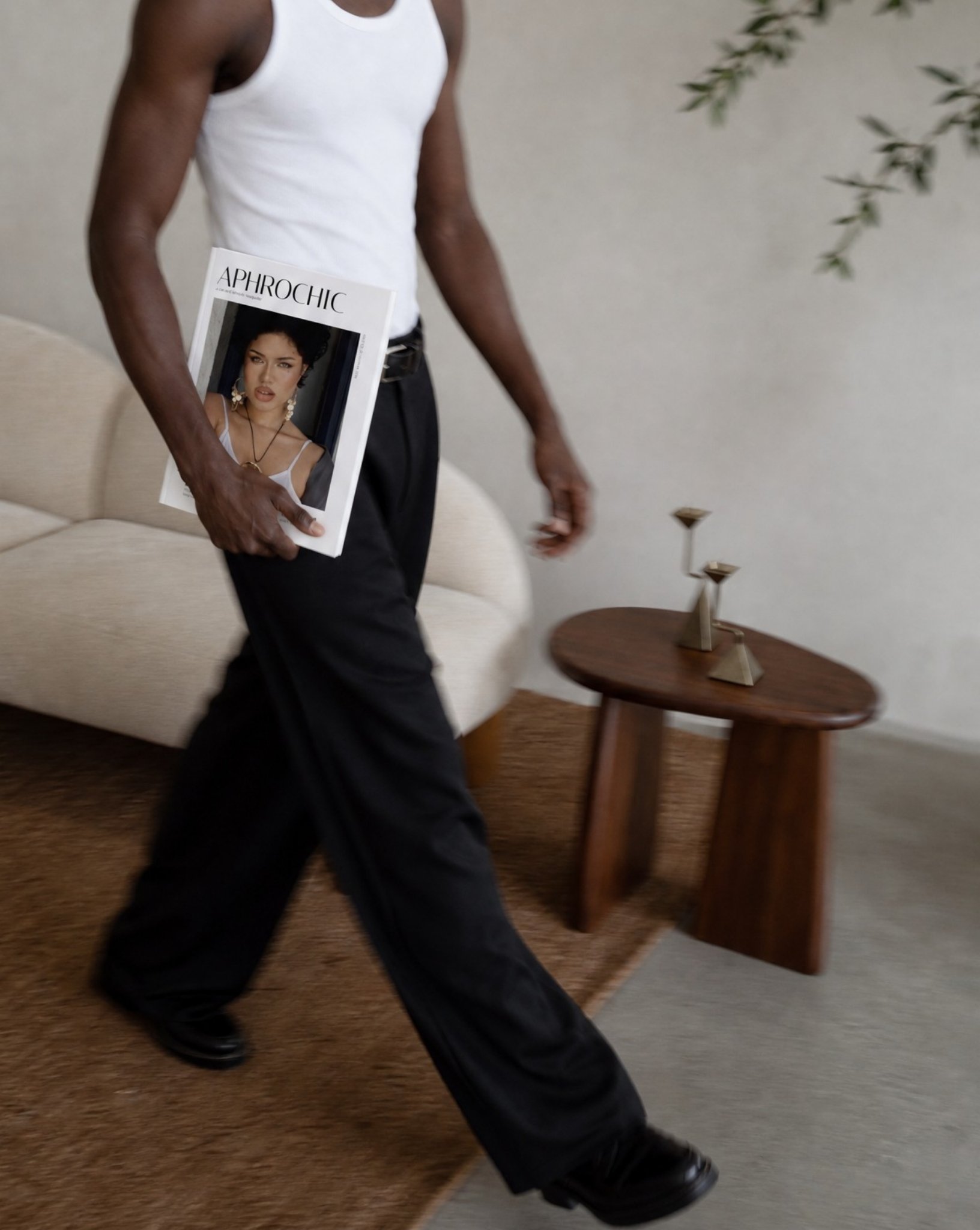
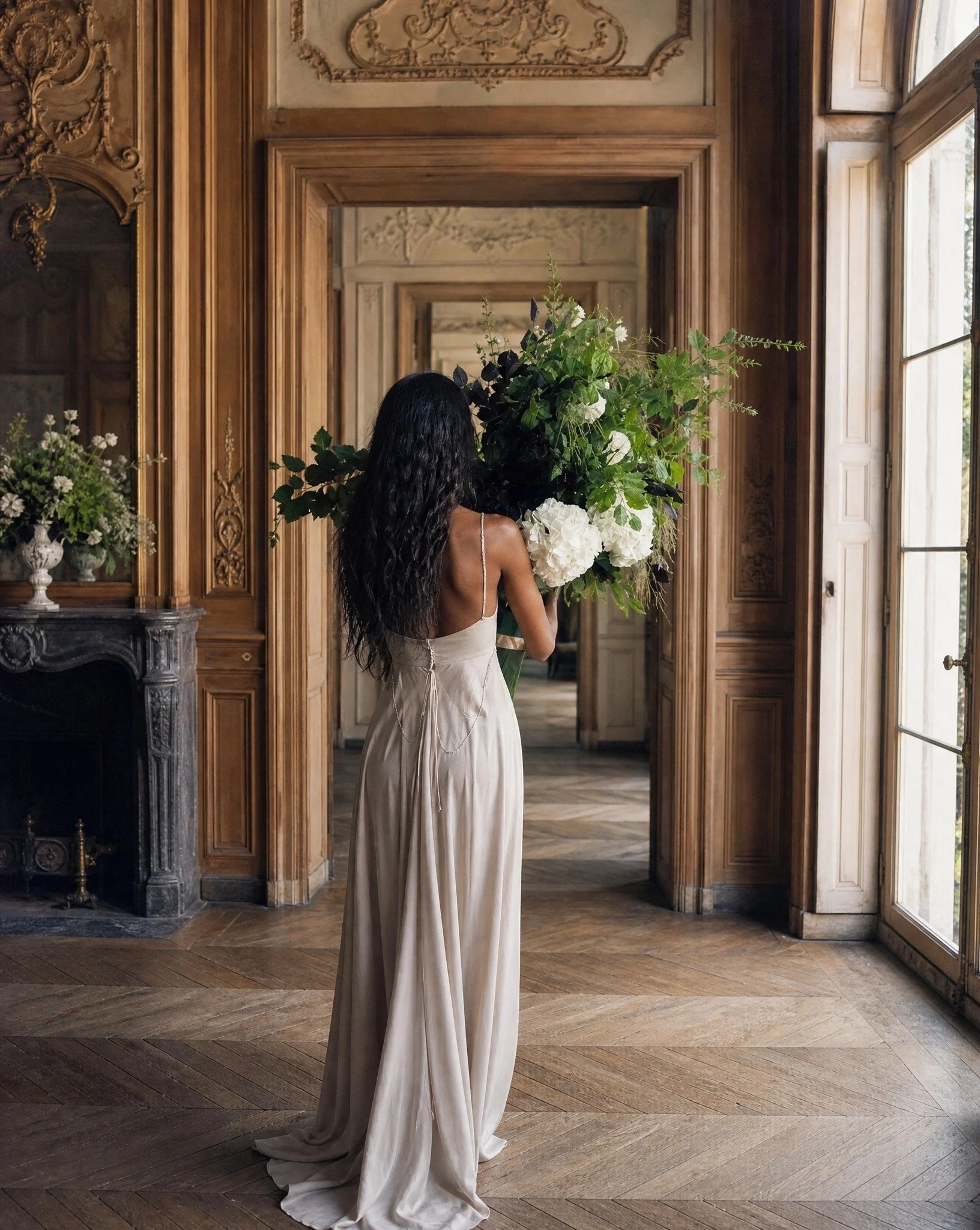
Read AphroChic Magazine and our Lifestyle content for editorials on lifestyle and culture from across the African Diaspora.
LIFESTYLE EDITORIALS
Lifestyle & Culture Inspiration From Across The African Diaspora